Can the Savings and Investments Union close CEE's investment gap?
Savings and Investment Union
This article examines whether the EU’s Savings and Investments Union can help close Central and Eastern Europe’s investment gap by mobilising household savings and directing more private capital towards productive investment. It looks at the opportunities for deeper regional capital markets and better access to finance, while warning that financial integration alone will not guarantee convergence unless capital also reaches smaller and developing markets.

Topics
Article Content
Introduction
The European Union's Savings and Investments Union (SIU) seeks to mobilise Europe's vast pool of household savings and channel more capital towards productive investment. Presented as a key pillar of the EU's competitiveness agenda, the initiative aims to strengthen capital markets, improve access to finance and support investment in strategic priorities such as innovation, digitalisation, defence and the green transition. While the objectives are broadly shared across the EU, the implications for Central and Eastern Europe (CEE) may differ significantly from those for larger Western European economies.
Setting the scene: What is the Savings and Investments Union?
In March 2025, the European Commission presented its Savings and Investments Union (SIU) strategy, marking the latest step in the EU's efforts to deepen financial integration. Building on the Capital Markets Union agenda, the SIU seeks to address a persistent challenge: despite high levels of household savings, Europe continues to face an investment gap that risks undermining long-term growth and competitiveness.
European households hold trillions of euros in financial assets, much of which remains in bank deposits, while many businesses continue to face difficulties accessing growth capital. Against a backdrop of growing global competition, geopolitical uncertainty and rising investment needs, the Commission argues that Europe must make better use of its own savings.
The scale of the challenge is considerable. The Draghi Report estimates that the EU will require an additional €750–800 billion in investment per year by 2030 to support competitiveness, innovation, decarbonisation, digitalisation and defence. Mobilising private capital will therefore be essential if Europe is to meet its economic and strategic objectives.
To achieve this, the SIU aims to channel more capital towards productive investment by encouraging greater retail participation in capital markets, reducing barriers to cross-border investment and expanding financing opportunities for businesses and SMEs.
For Central and Eastern Europe, the key question is not whether Europe can mobilise more savings, but whether those savings can be channelled towards smaller and developing markets that continue to face significant investment gaps.
As Mario Draghi observed in his report on European competitiveness, "Integrating Europe's capital markets to better channel high household savings towards productive investments in the EU will be essential." The Savings and Investments Union is intended to address precisely this challenge. In this sense, the SIU is not only a capital markets project but also a test of the EU's ability to support economic convergence through financial integration.
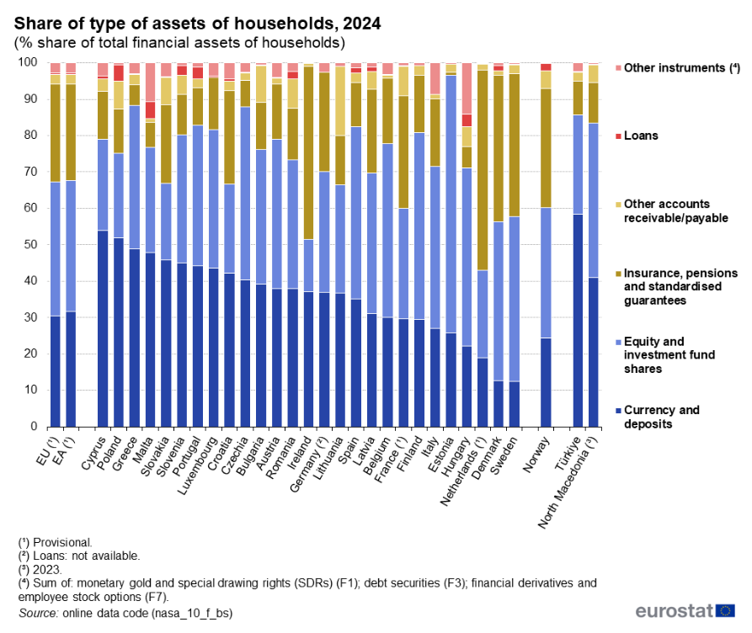
Figure 1. Composition of household financial assets in Europe (2024)
Figure 1 highlights significant differences in household saving patterns across Europe. While several CEE countries remain more deposit-oriented than many Western European economies, others, such as Estonia, exhibit higher levels of market-based investment. As a result, the impact of the Savings and Investments Union is likely to vary across Member States. Source: Eurostat.
CEE starts from a different position
While the SIU is designed as a Union-wide initiative, Europe's financial systems remain highly diverse.
Across much of Central and Eastern Europe, household savings remain more deposit-oriented than in many Western European economies, while private capital markets are generally smaller and access to growth financing more limited. According to Invest Europe, private equity investment in the region represented just 0.112% of GDP in 2024, compared with a European average of 0.551%, highlighting a significant investment gap.
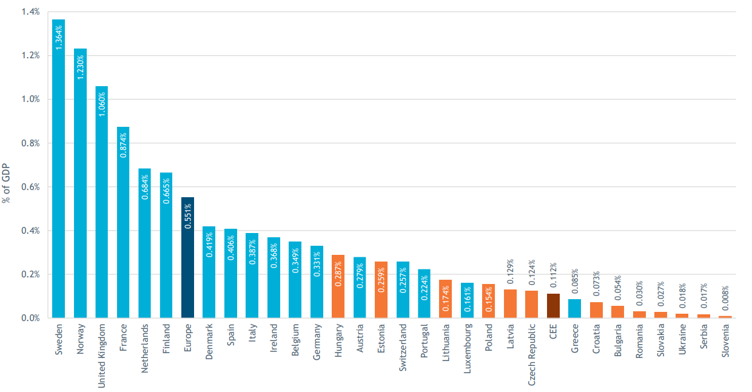
Figure 2. Private equity investment as a percentage of GDP: CEE versus Europe (2024)
Source: Invest Europe, Central and Eastern Europe Private Equity Statistics 2024
Figure 2 also illustrates the diversity within the region. Countries such as Hungary and Estonia recorded investment levels above the CEE average, while others, including Romania, Slovakia and Slovenia, attracted considerably lower levels of private capital. These differences suggest that while some CEE markets may be well positioned to benefit from deeper financial integration, others may struggle to attract additional capital unless structural barriers and market development gaps are also addressed.
The opportunity: more investment, deeper markets and stronger competitiveness
For many CEE economies, the SIU presents significant opportunities. The region continues to face substantial investment needs in areas such as infrastructure, energy security, digitalisation, innovation and industrial modernisation, which public resources alone are unlikely to meet.
By improving access to long-term private capital and reducing barriers to cross-border investment, the SIU could help businesses access a broader investor base and support the development of stronger regional capital markets. This is particularly important for innovative SMEs and scale-ups, for whom access to financing remains a key barrier to growth. Improved access to equity financing could help reduce reliance on bank lending and support the growth of innovative firms that often face limited domestic funding options.
The SIU is also closely linked to the EU's broader competitiveness agenda. As highlighted by the Letta and Draghi reports, mobilising more investment will be essential to supporting innovation, productivity growth and economic convergence across Europe. For CEE countries, this could help accelerate economic development and strengthen resilience in an increasingly competitive global environment.
The challenge is particularly visible in sectors such as technology, clean energy and advanced manufacturing, where promising firms often struggle to secure growth capital domestically and may increasingly look abroad for financing. By improving access to private investment, the SIU could help more companies scale within Europe rather than seeking capital elsewhere.
The risk: integration without convergence?
The SIU is not without risks. While deeper integration may improve the flow of capital across Europe, investment does not necessarily flow evenly. Investors often favour larger, more liquid and more familiar markets, raising the possibility that integration could reinforce existing concentrations of financial activity rather than reduce them. Without sufficient market depth and investor participation, smaller markets may find it easier for capital to leave than for new capital to arrive.
For Central and Eastern Europe, the challenge is therefore not only attracting investment but remaining competitive within a more integrated financial landscape. If capital continues to concentrate in Europe's largest financial centres, smaller markets could struggle to capture the full benefits of the SIU.
Ultimately, the success of the Savings and Investments Union will not be measured solely by how much capital it mobilises, but by whether it helps close investment gaps across Europe. The initiative offers a significant opportunity to deepen capital markets, improve access to finance and strengthen competitiveness across CEE. Yet its long-term success will depend on whether financial integration also delivers economic convergence. The real challenge for policymakers will be ensuring that capital flows not only more freely across Europe, but also more broadly across Europe.
Key takeaways
1) The Savings and Investments Union aims to mobilise Europe's vast pool of savings and channel more capital towards productive investment, innovation and long-term competitiveness.
2) For Central and Eastern Europe, the initiative could improve access to finance, support business growth and help deepen regional capital markets.
3) However, significant differences in financial market development mean that the benefits of the SIU are unlikely to be distributed evenly across the EU.
4) The ultimate success of the SIU will depend not only on how much capital it mobilises, but also on whether it helps narrow investment gaps and support economic convergence across Europe.
Article Content
Introduction
The European Union's Savings and Investments Union (SIU) seeks to mobilise Europe's vast pool of household savings and channel more capital towards productive investment. Presented as a key pillar of the EU's competitiveness agenda, the initiative aims to strengthen capital markets, improve access to finance and support investment in strategic priorities such as innovation, digitalisation, defence and the green transition. While the objectives are broadly shared across the EU, the implications for Central and Eastern Europe (CEE) may differ significantly from those for larger Western European economies.
Setting the scene: What is the Savings and Investments Union?
In March 2025, the European Commission presented its Savings and Investments Union (SIU) strategy, marking the latest step in the EU's efforts to deepen financial integration. Building on the Capital Markets Union agenda, the SIU seeks to address a persistent challenge: despite high levels of household savings, Europe continues to face an investment gap that risks undermining long-term growth and competitiveness.
European households hold trillions of euros in financial assets, much of which remains in bank deposits, while many businesses continue to face difficulties accessing growth capital. Against a backdrop of growing global competition, geopolitical uncertainty and rising investment needs, the Commission argues that Europe must make better use of its own savings.
The scale of the challenge is considerable. The Draghi Report estimates that the EU will require an additional €750–800 billion in investment per year by 2030 to support competitiveness, innovation, decarbonisation, digitalisation and defence. Mobilising private capital will therefore be essential if Europe is to meet its economic and strategic objectives.
To achieve this, the SIU aims to channel more capital towards productive investment by encouraging greater retail participation in capital markets, reducing barriers to cross-border investment and expanding financing opportunities for businesses and SMEs.
For Central and Eastern Europe, the key question is not whether Europe can mobilise more savings, but whether those savings can be channelled towards smaller and developing markets that continue to face significant investment gaps.
As Mario Draghi observed in his report on European competitiveness, "Integrating Europe's capital markets to better channel high household savings towards productive investments in the EU will be essential." The Savings and Investments Union is intended to address precisely this challenge. In this sense, the SIU is not only a capital markets project but also a test of the EU's ability to support economic convergence through financial integration.
Figure 1. Composition of household financial assets in Europe (2024)
Figure 1 highlights significant differences in household saving patterns across Europe. While several CEE countries remain more deposit-oriented than many Western European economies, others, such as Estonia, exhibit higher levels of market-based investment. As a result, the impact of the Savings and Investments Union is likely to vary across Member States. Source: Eurostat.
CEE starts from a different position
While the SIU is designed as a Union-wide initiative, Europe's financial systems remain highly diverse.
Across much of Central and Eastern Europe, household savings remain more deposit-oriented than in many Western European economies, while private capital markets are generally smaller and access to growth financing more limited. According to Invest Europe, private equity investment in the region represented just 0.112% of GDP in 2024, compared with a European average of 0.551%, highlighting a significant investment gap.
Figure 2. Private equity investment as a percentage of GDP: CEE versus Europe (2024)
Source: Invest Europe, Central and Eastern Europe Private Equity Statistics 2024
Figure 2 also illustrates the diversity within the region. Countries such as Hungary and Estonia recorded investment levels above the CEE average, while others, including Romania, Slovakia and Slovenia, attracted considerably lower levels of private capital. These differences suggest that while some CEE markets may be well positioned to benefit from deeper financial integration, others may struggle to attract additional capital unless structural barriers and market development gaps are also addressed.
The opportunity: more investment, deeper markets and stronger competitiveness
For many CEE economies, the SIU presents significant opportunities. The region continues to face substantial investment needs in areas such as infrastructure, energy security, digitalisation, innovation and industrial modernisation, which public resources alone are unlikely to meet.
By improving access to long-term private capital and reducing barriers to cross-border investment, the SIU could help businesses access a broader investor base and support the development of stronger regional capital markets. This is particularly important for innovative SMEs and scale-ups, for whom access to financing remains a key barrier to growth. Improved access to equity financing could help reduce reliance on bank lending and support the growth of innovative firms that often face limited domestic funding options.
The SIU is also closely linked to the EU's broader competitiveness agenda. As highlighted by the Letta and Draghi reports, mobilising more investment will be essential to supporting innovation, productivity growth and economic convergence across Europe. For CEE countries, this could help accelerate economic development and strengthen resilience in an increasingly competitive global environment.
The challenge is particularly visible in sectors such as technology, clean energy and advanced manufacturing, where promising firms often struggle to secure growth capital domestically and may increasingly look abroad for financing. By improving access to private investment, the SIU could help more companies scale within Europe rather than seeking capital elsewhere.
The risk: integration without convergence?
The SIU is not without risks. While deeper integration may improve the flow of capital across Europe, investment does not necessarily flow evenly. Investors often favour larger, more liquid and more familiar markets, raising the possibility that integration could reinforce existing concentrations of financial activity rather than reduce them. Without sufficient market depth and investor participation, smaller markets may find it easier for capital to leave than for new capital to arrive.
For Central and Eastern Europe, the challenge is therefore not only attracting investment but remaining competitive within a more integrated financial landscape. If capital continues to concentrate in Europe's largest financial centres, smaller markets could struggle to capture the full benefits of the SIU.
Ultimately, the success of the Savings and Investments Union will not be measured solely by how much capital it mobilises, but by whether it helps close investment gaps across Europe. The initiative offers a significant opportunity to deepen capital markets, improve access to finance and strengthen competitiveness across CEE. Yet its long-term success will depend on whether financial integration also delivers economic convergence. The real challenge for policymakers will be ensuring that capital flows not only more freely across Europe, but also more broadly across Europe.
Key takeaways
1) The Savings and Investments Union aims to mobilise Europe's vast pool of savings and channel more capital towards productive investment, innovation and long-term competitiveness.
2) For Central and Eastern Europe, the initiative could improve access to finance, support business growth and help deepen regional capital markets.
3) However, significant differences in financial market development mean that the benefits of the SIU are unlikely to be distributed evenly across the EU.
4) The ultimate success of the SIU will depend not only on how much capital it mobilises, but also on whether it helps narrow investment gaps and support economic convergence across Europe.