CEE Markets & Investment Review - July 2026
Monthly Publication

Monthly intelligence on capital markets, banking, investment and long-term savings across Central and Eastern Europe
Article Content
Introduction
Welcome to the first edition of the CEE Markets & Investment Review, a new publication from CEE Perspective focused exclusively on developments taking place within Central and Eastern European markets.
While our weekly newsletter follows EU financial policy and regulatory developments, this publication examines the regional economy from the ground up: how capital markets are developing, how banking and monetary conditions are changing, where investment is being directed, and how pension and long-term savings systems are evolving.
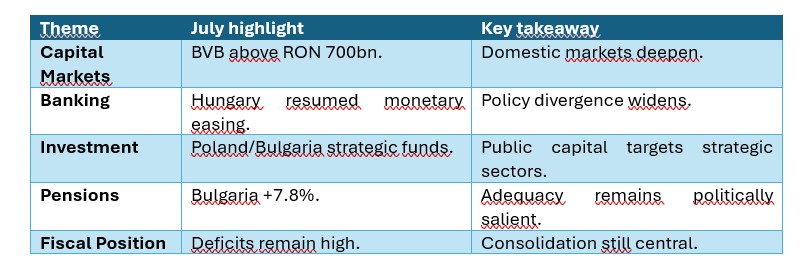
July highlighted a CEE region that is becoming more financially differentiated. Romania’s capital-market development, Hungary’s easing cycle and new strategic investment vehicles in Poland and Bulgaria point to stronger domestic financing capacity, but fiscal constraints and uneven monetary conditions remain important. The central question is increasingly not whether capital is available, but how effectively the region can channel it towards productive investment and long-term competitiveness.
Market dashboard
Capital markets
Romania strengthens its position as a regional capital market
Romania recorded one of the clearest capital-market advances in the region during July. Bucharest Stock Exchange data show that Main Market capitalisation rose from around RON 669.3 billion at the end of June to above RON 700 billion during the second half of July, reaching approximately RON 712 billion on 22 July. This represents a significant expansion in the size of Romania's listed equity market and provides further evidence of the country's growing capital-market relevance within CEE.
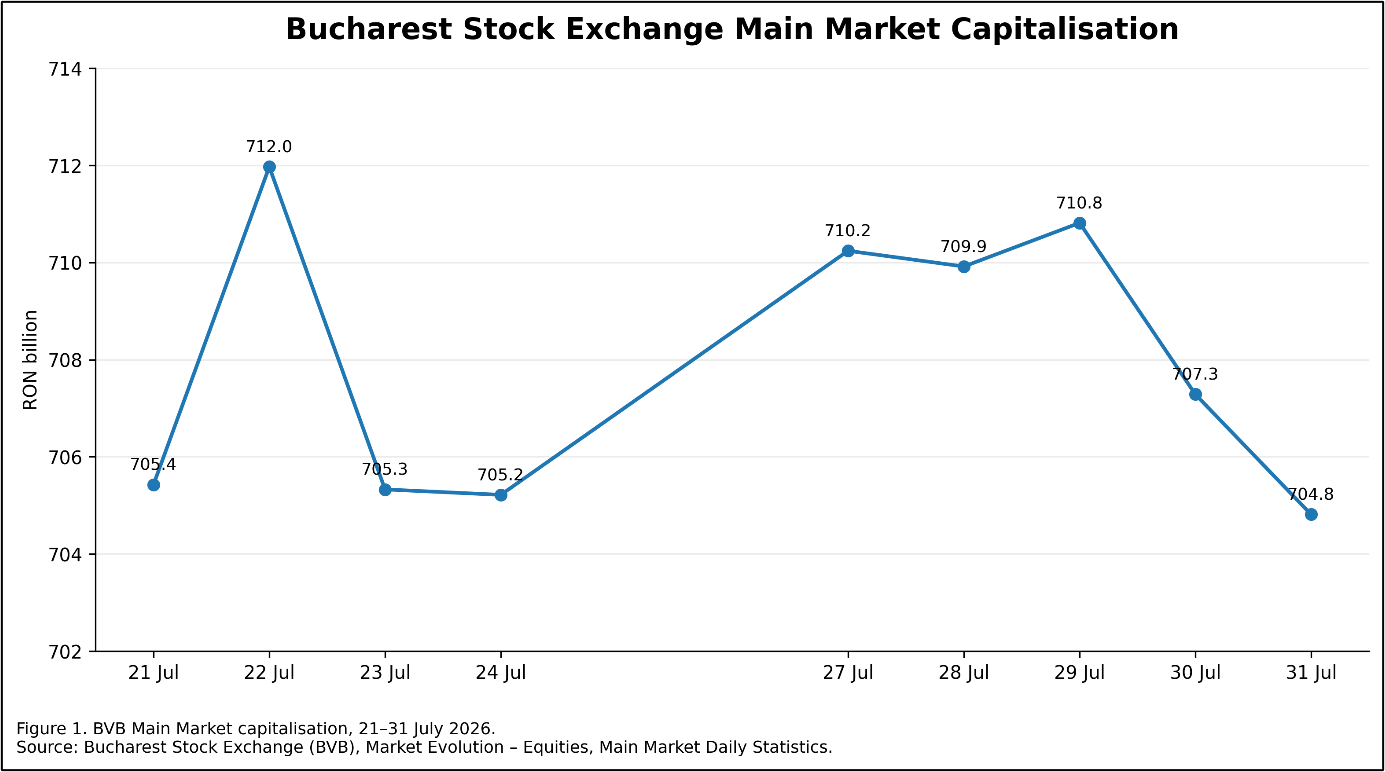
Figure 1. Bucharest Stock Exchange (BVB) Main Market capitalisation remained broadly stable between RON 705 billion and RON 712 billion during 21–31 July 2026, equivalent to approximately €140 billion. Source: Bucharest Stock Exchange (BVB), Main Market Daily Statistics.
Romania, like much of Central and Eastern Europe, has historically relied heavily on bank financing. A larger and more developed equity market could potentially broaden companies' access to long-term financing, support future listings and provide a wider investable universe for domestic and international institutional investors. However, market capitalisation alone does not determine market depth: liquidity, free float, the number and diversity of listed companies and the ability to maintain a pipeline of new issuers remain equally important.
The development also comes alongside a broader strengthening of Romania's capital-market infrastructure. On 1 July, the Financial Supervisory Authority authorised CCP.RO Bucharest as a central counterparty under EMIR, completing an important part of the infrastructure supporting Romania's capital and energy markets. BVB described the authorisation as a significant step in aligning Romania's framework with relevant international standards in the context of the country's OECD accession process.
Corporate governance is another area where reforms are becoming more visible. In June, BVB published its first monitoring report under the revised Corporate Governance Code, finding that approximately 71% of the assessed provisions were reported as complied with across the regulated market. The revised framework, developed with support from the EBRD, is intended to strengthen transparency, accountability and governance practices among listed companies.
The wider investment environment also demonstrated considerable resilience. According to EY Romania, the Romanian mergers and acquisitions (M&A) market recorded its strongest first half on record in 2026. A total of 143 transactions were announced during the first six months of the year, representing a 3% increase compared with H1 2025, while the estimated total transaction value reached USD 6.0 billion, up 49% year-on-year. Disclosed transaction values alone totalled USD 4.0 billion, the highest half-year level ever recorded, reflecting a growing number of large strategic transactions.
Strategic investors remained the dominant market participants, accounting for 83% of total deal volume, while foreign investor activity increased by 15% compared with the same period of 2025 and represented more than half of all announced transactions. Romania also continued to record substantially more inbound than outbound M&A activity, reinforcing its attractiveness as a destination for international strategic investors.
CEE Perspective analysis: Romania's recent experience illustrates both the opportunities and the remaining challenges facing capital-market development across Central and Eastern Europe. A deeper domestic capital market, supported by growing institutional investors and sustained foreign investment, can broaden companies' access to long-term financing while reinforcing investor confidence. Continued cross-border M&A activity also demonstrates that international investors continue to see significant long-term opportunities in Romania despite ongoing fiscal and political uncertainty.
Looking ahead, the next stage of capital-market development across CEE will depend less on headline market valuations and more on market quality. Increasing liquidity, strengthening corporate governance, expanding research coverage, improving market infrastructure and maintaining a consistent pipeline of new listings will be essential to attracting larger pools of international institutional capital and reducing the region's historical reliance on bank financing.
Banking and monetary conditions
Hungary continues its gradual easing cycle
The Magyar Nemzeti Bank reduced its base rate from 6.00% to 5.75% at its 21 July meeting. The overnight deposit and collateralised lending rates were also lowered by 25 basis points, to 4.75% and 6.75% respectively. The central bank said that Hungary’s future risk assessment would be influenced by the fiscal path, geopolitical developments and energy-market conditions.
The decision continued Hungary's gradual easing cycle. While signalling that further reductions may be possible if favourable conditions persist, the MNB emphasised the importance of maintaining positive real interest rates and preserving exchange-rate and financial-market stability as key conditions for anchoring inflation expectations.
Lower interest rates are likely to reduce borrowing costs and could gradually support credit demand. At the same time, monetary easing may compress the strong net interest margins that banks benefited from during the high-interest-rate environment, placing greater emphasis on loan growth, fee income, cost efficiency and asset quality.
Hungary's easing path should not be interpreted as a uniform regional trend. According to UniCredit, Hungary is expected to continue its easing cycle, while Poland, Romania and Slovakia are likely to have more limited scope for monetary easing over the coming quarters. The report also suggests that the Czech National Bank could tighten policy once more before eventually moving towards a gradual normalisation of interest rates.
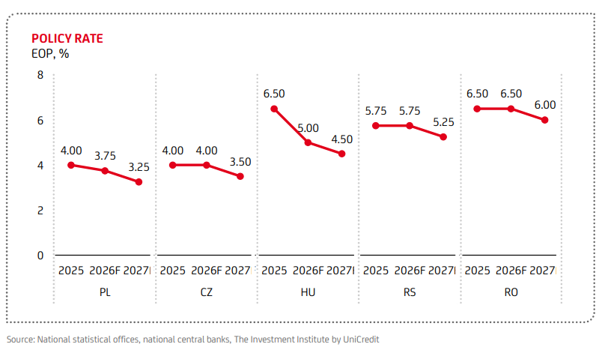
Figure 2. Selected CEE policy-rate projections, 2025–2027 Source: UniCredit Investment Institute, based on national central banks and statistical offices.
These differing policy paths reflect varying combinations of inflation, fiscal conditions, exchange-rate sensitivity and domestic demand across the region. As a result, financing conditions are likely to remain uneven, meaning businesses operating across Central and Eastern Europe should not expect borrowing costs to converge at the same pace.
Lower interest rates may reduce some profitability tailwinds, while fiscal uncertainty could influence sovereign funding costs, government bond valuations and demand for credit. At the same time, banks will be expected to finance growing investment needs related to energy, defence, digitalisation and infrastructure while maintaining prudent lending standards.
CEE Perspective analysis: The next phase of banking across Central and Eastern Europe is likely to be defined less by the benefits of high interest rates and more by banks' ability to allocate credit efficiently while preserving asset quality. As monetary conditions gradually normalise, institutions will increasingly compete on lending activity, operational efficiency and the quality of their balance sheets rather than exceptionally high interest margins.
For the region, this represents both an opportunity and a challenge. CEE economies remain structurally dependent on bank financing, meaning that stronger lending to productive businesses, infrastructure and innovation could support long-term growth and competitiveness. At the same time, fiscal uncertainty, sovereign financing needs and an evolving regulatory environment may encourage banks to remain concentrated in lower-risk sovereign and household lending rather than expanding financing for productive investment.
Investment
Poland activates a new model for strategic public investment
Poland’s Security and Defence Fund became operational in July, allowing local authorities and companies to apply for financing. The fund has a total value of approximately PLN 23 billion and is financed through Poland’s Recovery and Resilience Plan. It is intended to support civil protection, dual-use infrastructure, cybersecurity, critical services and the development of Polish industrial and defence capacity.
Around half of the funding is intended for local-government projects, including shelters, road infrastructure and cybersecurity. The remaining resources will be divided between loans and equity financing available to companies in defence, technology, industry, transport and energy. BGK will manage the lending component, while the special-purpose vehicle Chrobry S.A. will be responsible for equity investment.
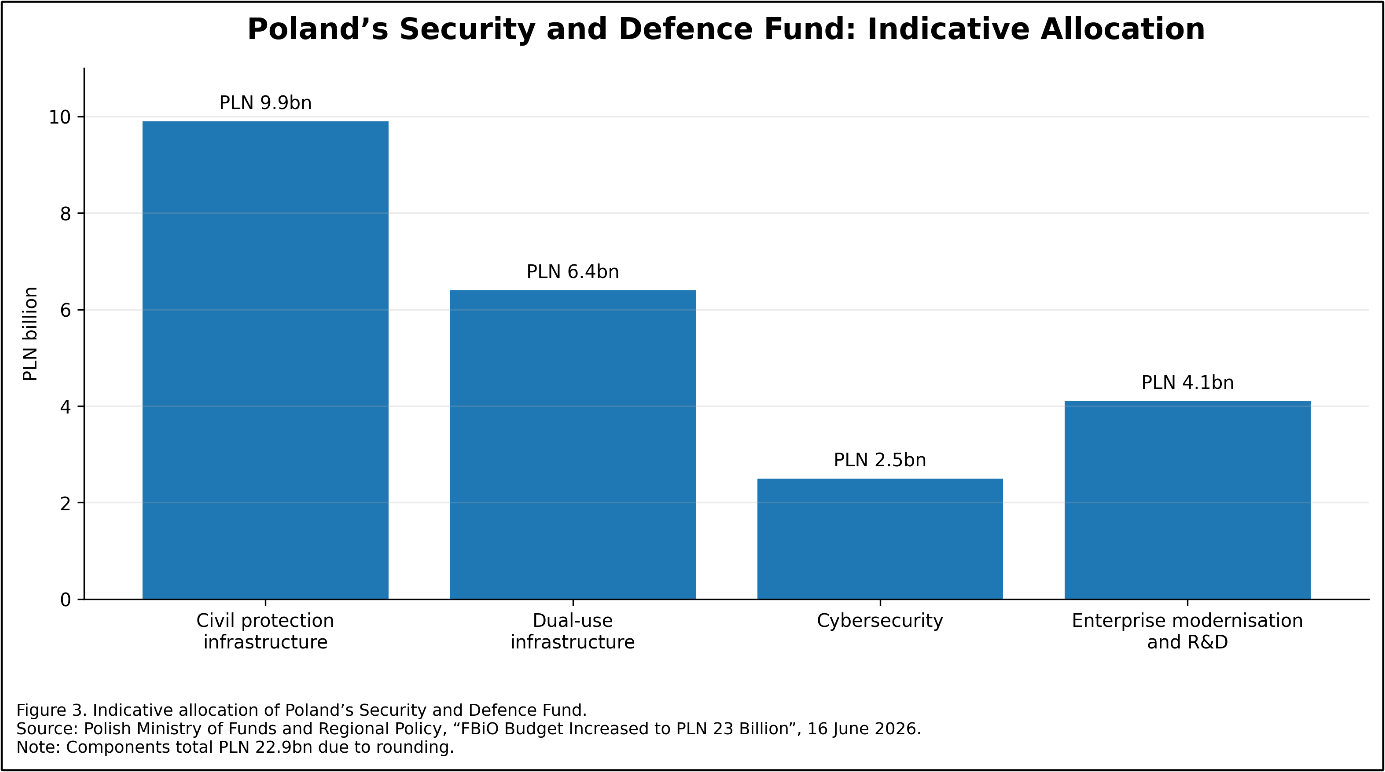
Figure 3. Indicative allocation of Poland’s Security and Defence Fund Civil protection infrastructure receives approximately PLN 9.9 billion, followed by dual-use infrastructure at PLN 6.4 billion, enterprise modernisation and R&D at PLN 4.1 billion, and cybersecurity at PLN 2.5 billion. Source: Polish Ministry of Funds and Regional Policy, FBiO Budget Increased to PLN 23 Billion, 16 June 2026.
Note: Components total PLN 22.9 billion due to rounding.
The fund is notable because it integrates regional development, public security and industrial policy within one financing structure. Rather than relying solely on traditional public procurement, Poland is using loans and equity instruments to create longer-term financing capacity. This approach may have wider relevance across CEE. The region faces large investment requirements but limited fiscal space. Using public capital to reduce risk and mobilise private finance can extend the impact of public resources, particularly in sectors where commercial investors may consider project timelines or technological risks too high.
Bulgaria targets critical and dual-use technologies
Bulgaria’s Fund Manager of Financial Instruments continued preparations for a €30 million Strategic Technologies and Defence Fund. The vehicle will provide equity or quasi-equity financing to companies working in fields covered by the EU’s Strategic Technologies for Europe Platform, including deep technology, cybersecurity, quantum technologies, biotechnology, clean technology and dual-use production.
Individual companies may receive up to €5 million in equity or quasi-equity financing, potentially combined with grants. The instrument is intended to support companies at different stages of development and build a diversified portfolio rather than finance a single flagship project.
The Bulgarian initiative is smaller than Poland’s programme but strategically important. CEE technology companies often face a shortage of growth-stage capital, particularly when operating in capital-intensive or regulated sectors. A dedicated public-backed fund can help bridge the gap between early-stage grants and commercial financing.
CEE Perspective analysis: The Polish and Bulgarian initiatives illustrate a broader shift in how public investment is being deployed across Central and Eastern Europe. Defence, cybersecurity, dual-use infrastructure and critical technologies are no longer viewed solely as security priorities; they are increasingly becoming central pillars of industrial policy, competitiveness and long-term capital allocation. This creates new opportunities for regional manufacturers, technology companies and investment funds, while encouraging closer cooperation between governments, development banks and private investors.
The key question, however, is whether these instruments will succeed in mobilising additional private capital rather than simply substituting traditional public expenditure. For CEE, where investment needs remain substantial and public resources are inherently limited, their long-term success will depend on their ability to crowd in private investment, accelerate innovation and strengthen productive capacity. Well-designed financial instruments can multiply the impact of public funding and improve Europe's strategic resilience, whereas poorly targeted interventions risk fragmenting capital, distorting markets or supporting investments that would have taken place regardless.
Pensions and long-term savings
Bulgaria raises pensions by 7.8%
Bulgaria indexed employment-related pensions by 7.8% from 1 July under its “Swiss rule” adjustment mechanism. The increase applies to pensions granted by the end of 2025 and also covers survivor supplements. The minimum old-age pension increased from €322.37 to €347.51, while the social old-age pension rose to €183.81.
The indexation provides direct support to pensioners and helps preserve purchasing power. It also raises wider questions about the balance between pension adequacy and fiscal sustainability. Bulgaria’s government projected an average pension of €543.46 in 2026 and a real increase in pension income, but higher pension expenditure will remain a significant component of public finances.
CEE Perspective analysis:
The Bulgarian pension indexation highlights a broader challenge facing pension systems across Central and Eastern Europe: balancing short-term adequacy with long-term sustainability. While regular indexation protects pensioners' purchasing power and supports social cohesion, it does not by itself strengthen the long-term financing of retirement systems. Many CEE countries continue to have relatively underdeveloped occupational and voluntary pension pillars, while confidence in funded pension arrangements has, in some cases, been weakened by repeated policy changes.
A more stable and diversified pension framework could deliver two important objectives simultaneously. Stronger supplementary pension savings can improve future retirement adequacy while also creating long-term domestic institutional capital capable of supporting capital-market development and productive investment. Romania's mandatory private pension system illustrates how funded pensions can contribute to both retirement security and deeper domestic financial markets.
For the region, the priority should be a long-term policy framework that extends beyond electoral cycles. Well-designed pension systems require stable rules, clear roles for the different pension pillars and strong governance that safeguards the interests of savers. While pension assets can support long-term investment, this must always remain consistent with fiduciary duties, prudent diversification and the best interests of beneficiaries, rather than serving as an instrument of public financing.
Regional dashboard
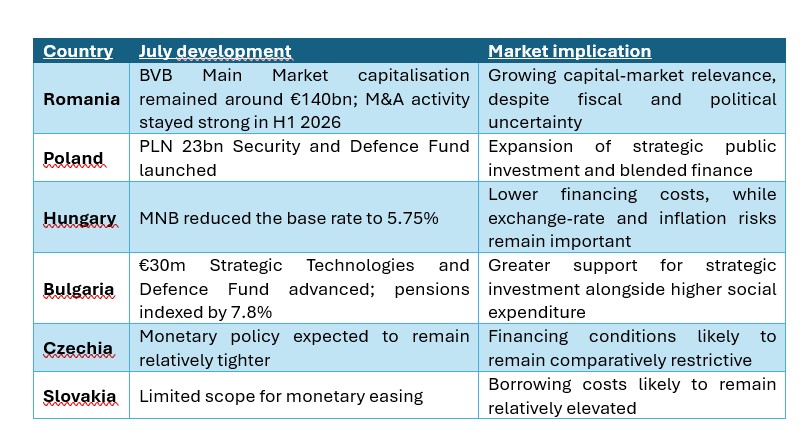
Five signals from July
1. Domestic capital is becoming more important: The growth of Romania’s exchange and M&A market demonstrates increasing domestic and regional financial capacity.
2. Monetary convergence should not be assumed: CEE central banks are moving at different speeds, reflecting national inflation and fiscal conditions.
3. Strategic autonomy is becoming an investment category: Defence, cybersecurity and deep technology are attracting dedicated public financing vehicles.
4. Public money is increasingly being deployed through financial instruments: Loans, guarantees and equity funds are complementing grants and traditional budget spending.
5. Pension adequacy remains politically urgent, but long-term savings reform is still incomplete.
What to watch next
Romania: Fiscal execution will remain central to sovereign-risk assessments. The first-half improvement is meaningful, but full-year performance and political capacity to sustain consolidation will determine whether confidence endures. Fitch affirmed Romania’s investment-grade rating with a negative outlook after July, while warning that political instability could complicate deficit reduction beyond 2026.
Hungary: The September Inflation Reportwill be a key determinant of whether the MNB continues its easing cycle, with inflation developments, the fiscal outlook, foreign-exchange stability and geopolitical risks remaining central to its assessment.
Poland: Attention will turn to the implementation of Security and Defence Fund financing and whether the programme successfully attracts private investment rather than functioning mainly as public expenditure.
Bulgaria: Applications from financial intermediaries are now open for the Strategic Technologies and Defence Fund. The next key step will be the selection of a manager capable of building a commercially credible portfolio.
Region-wide: Investors will continue watching second-quarter bank results, sovereign borrowing costs, inflation releases and the extent to which domestic demand can offset weak external manufacturing conditions.
Article Content
Introduction
Welcome to the first edition of the CEE Markets & Investment Review, a new publication from CEE Perspective focused exclusively on developments taking place within Central and Eastern European markets.
While our weekly newsletter follows EU financial policy and regulatory developments, this publication examines the regional economy from the ground up: how capital markets are developing, how banking and monetary conditions are changing, where investment is being directed, and how pension and long-term savings systems are evolving.
July highlighted a CEE region that is becoming more financially differentiated. Romania’s capital-market development, Hungary’s easing cycle and new strategic investment vehicles in Poland and Bulgaria point to stronger domestic financing capacity, but fiscal constraints and uneven monetary conditions remain important. The central question is increasingly not whether capital is available, but how effectively the region can channel it towards productive investment and long-term competitiveness.
Market dashboard
Capital markets
Romania strengthens its position as a regional capital market
Romania recorded one of the clearest capital-market advances in the region during July. Bucharest Stock Exchange data show that Main Market capitalisation rose from around RON 669.3 billion at the end of June to above RON 700 billion during the second half of July, reaching approximately RON 712 billion on 22 July. This represents a significant expansion in the size of Romania's listed equity market and provides further evidence of the country's growing capital-market relevance within CEE.
Figure 1. Bucharest Stock Exchange (BVB) Main Market capitalisation remained broadly stable between RON 705 billion and RON 712 billion during 21–31 July 2026, equivalent to approximately €140 billion. Source: Bucharest Stock Exchange (BVB), Main Market Daily Statistics.
Romania, like much of Central and Eastern Europe, has historically relied heavily on bank financing. A larger and more developed equity market could potentially broaden companies' access to long-term financing, support future listings and provide a wider investable universe for domestic and international institutional investors. However, market capitalisation alone does not determine market depth: liquidity, free float, the number and diversity of listed companies and the ability to maintain a pipeline of new issuers remain equally important.
The development also comes alongside a broader strengthening of Romania's capital-market infrastructure. On 1 July, the Financial Supervisory Authority authorised CCP.RO Bucharest as a central counterparty under EMIR, completing an important part of the infrastructure supporting Romania's capital and energy markets. BVB described the authorisation as a significant step in aligning Romania's framework with relevant international standards in the context of the country's OECD accession process.
Corporate governance is another area where reforms are becoming more visible. In June, BVB published its first monitoring report under the revised Corporate Governance Code, finding that approximately 71% of the assessed provisions were reported as complied with across the regulated market. The revised framework, developed with support from the EBRD, is intended to strengthen transparency, accountability and governance practices among listed companies.
The wider investment environment also demonstrated considerable resilience. According to EY Romania, the Romanian mergers and acquisitions (M&A) market recorded its strongest first half on record in 2026. A total of 143 transactions were announced during the first six months of the year, representing a 3% increase compared with H1 2025, while the estimated total transaction value reached USD 6.0 billion, up 49% year-on-year. Disclosed transaction values alone totalled USD 4.0 billion, the highest half-year level ever recorded, reflecting a growing number of large strategic transactions.
Strategic investors remained the dominant market participants, accounting for 83% of total deal volume, while foreign investor activity increased by 15% compared with the same period of 2025 and represented more than half of all announced transactions. Romania also continued to record substantially more inbound than outbound M&A activity, reinforcing its attractiveness as a destination for international strategic investors.
CEE Perspective analysis: Romania's recent experience illustrates both the opportunities and the remaining challenges facing capital-market development across Central and Eastern Europe. A deeper domestic capital market, supported by growing institutional investors and sustained foreign investment, can broaden companies' access to long-term financing while reinforcing investor confidence. Continued cross-border M&A activity also demonstrates that international investors continue to see significant long-term opportunities in Romania despite ongoing fiscal and political uncertainty.
Looking ahead, the next stage of capital-market development across CEE will depend less on headline market valuations and more on market quality. Increasing liquidity, strengthening corporate governance, expanding research coverage, improving market infrastructure and maintaining a consistent pipeline of new listings will be essential to attracting larger pools of international institutional capital and reducing the region's historical reliance on bank financing.
Banking and monetary conditions
Hungary continues its gradual easing cycle
The Magyar Nemzeti Bank reduced its base rate from 6.00% to 5.75% at its 21 July meeting. The overnight deposit and collateralised lending rates were also lowered by 25 basis points, to 4.75% and 6.75% respectively. The central bank said that Hungary’s future risk assessment would be influenced by the fiscal path, geopolitical developments and energy-market conditions.
The decision continued Hungary's gradual easing cycle. While signalling that further reductions may be possible if favourable conditions persist, the MNB emphasised the importance of maintaining positive real interest rates and preserving exchange-rate and financial-market stability as key conditions for anchoring inflation expectations.
Lower interest rates are likely to reduce borrowing costs and could gradually support credit demand. At the same time, monetary easing may compress the strong net interest margins that banks benefited from during the high-interest-rate environment, placing greater emphasis on loan growth, fee income, cost efficiency and asset quality.
Hungary's easing path should not be interpreted as a uniform regional trend. According to UniCredit, Hungary is expected to continue its easing cycle, while Poland, Romania and Slovakia are likely to have more limited scope for monetary easing over the coming quarters. The report also suggests that the Czech National Bank could tighten policy once more before eventually moving towards a gradual normalisation of interest rates.
Figure 2. Selected CEE policy-rate projections, 2025–2027 Source: UniCredit Investment Institute, based on national central banks and statistical offices.
These differing policy paths reflect varying combinations of inflation, fiscal conditions, exchange-rate sensitivity and domestic demand across the region. As a result, financing conditions are likely to remain uneven, meaning businesses operating across Central and Eastern Europe should not expect borrowing costs to converge at the same pace.
Lower interest rates may reduce some profitability tailwinds, while fiscal uncertainty could influence sovereign funding costs, government bond valuations and demand for credit. At the same time, banks will be expected to finance growing investment needs related to energy, defence, digitalisation and infrastructure while maintaining prudent lending standards.
CEE Perspective analysis: The next phase of banking across Central and Eastern Europe is likely to be defined less by the benefits of high interest rates and more by banks' ability to allocate credit efficiently while preserving asset quality. As monetary conditions gradually normalise, institutions will increasingly compete on lending activity, operational efficiency and the quality of their balance sheets rather than exceptionally high interest margins.
For the region, this represents both an opportunity and a challenge. CEE economies remain structurally dependent on bank financing, meaning that stronger lending to productive businesses, infrastructure and innovation could support long-term growth and competitiveness. At the same time, fiscal uncertainty, sovereign financing needs and an evolving regulatory environment may encourage banks to remain concentrated in lower-risk sovereign and household lending rather than expanding financing for productive investment.
Investment
Poland activates a new model for strategic public investment
Poland’s Security and Defence Fund became operational in July, allowing local authorities and companies to apply for financing. The fund has a total value of approximately PLN 23 billion and is financed through Poland’s Recovery and Resilience Plan. It is intended to support civil protection, dual-use infrastructure, cybersecurity, critical services and the development of Polish industrial and defence capacity.
Around half of the funding is intended for local-government projects, including shelters, road infrastructure and cybersecurity. The remaining resources will be divided between loans and equity financing available to companies in defence, technology, industry, transport and energy. BGK will manage the lending component, while the special-purpose vehicle Chrobry S.A. will be responsible for equity investment.
Figure 3. Indicative allocation of Poland’s Security and Defence Fund Civil protection infrastructure receives approximately PLN 9.9 billion, followed by dual-use infrastructure at PLN 6.4 billion, enterprise modernisation and R&D at PLN 4.1 billion, and cybersecurity at PLN 2.5 billion. Source: Polish Ministry of Funds and Regional Policy, FBiO Budget Increased to PLN 23 Billion, 16 June 2026.
Note: Components total PLN 22.9 billion due to rounding.
The fund is notable because it integrates regional development, public security and industrial policy within one financing structure. Rather than relying solely on traditional public procurement, Poland is using loans and equity instruments to create longer-term financing capacity. This approach may have wider relevance across CEE. The region faces large investment requirements but limited fiscal space. Using public capital to reduce risk and mobilise private finance can extend the impact of public resources, particularly in sectors where commercial investors may consider project timelines or technological risks too high.
Bulgaria targets critical and dual-use technologies
Bulgaria’s Fund Manager of Financial Instruments continued preparations for a €30 million Strategic Technologies and Defence Fund. The vehicle will provide equity or quasi-equity financing to companies working in fields covered by the EU’s Strategic Technologies for Europe Platform, including deep technology, cybersecurity, quantum technologies, biotechnology, clean technology and dual-use production.
Individual companies may receive up to €5 million in equity or quasi-equity financing, potentially combined with grants. The instrument is intended to support companies at different stages of development and build a diversified portfolio rather than finance a single flagship project.
The Bulgarian initiative is smaller than Poland’s programme but strategically important. CEE technology companies often face a shortage of growth-stage capital, particularly when operating in capital-intensive or regulated sectors. A dedicated public-backed fund can help bridge the gap between early-stage grants and commercial financing.
CEE Perspective analysis: The Polish and Bulgarian initiatives illustrate a broader shift in how public investment is being deployed across Central and Eastern Europe. Defence, cybersecurity, dual-use infrastructure and critical technologies are no longer viewed solely as security priorities; they are increasingly becoming central pillars of industrial policy, competitiveness and long-term capital allocation. This creates new opportunities for regional manufacturers, technology companies and investment funds, while encouraging closer cooperation between governments, development banks and private investors.
The key question, however, is whether these instruments will succeed in mobilising additional private capital rather than simply substituting traditional public expenditure. For CEE, where investment needs remain substantial and public resources are inherently limited, their long-term success will depend on their ability to crowd in private investment, accelerate innovation and strengthen productive capacity. Well-designed financial instruments can multiply the impact of public funding and improve Europe's strategic resilience, whereas poorly targeted interventions risk fragmenting capital, distorting markets or supporting investments that would have taken place regardless.
Pensions and long-term savings
Bulgaria raises pensions by 7.8%
Bulgaria indexed employment-related pensions by 7.8% from 1 July under its “Swiss rule” adjustment mechanism. The increase applies to pensions granted by the end of 2025 and also covers survivor supplements. The minimum old-age pension increased from €322.37 to €347.51, while the social old-age pension rose to €183.81.
The indexation provides direct support to pensioners and helps preserve purchasing power. It also raises wider questions about the balance between pension adequacy and fiscal sustainability. Bulgaria’s government projected an average pension of €543.46 in 2026 and a real increase in pension income, but higher pension expenditure will remain a significant component of public finances.
CEE Perspective analysis:
The Bulgarian pension indexation highlights a broader challenge facing pension systems across Central and Eastern Europe: balancing short-term adequacy with long-term sustainability. While regular indexation protects pensioners' purchasing power and supports social cohesion, it does not by itself strengthen the long-term financing of retirement systems. Many CEE countries continue to have relatively underdeveloped occupational and voluntary pension pillars, while confidence in funded pension arrangements has, in some cases, been weakened by repeated policy changes.
A more stable and diversified pension framework could deliver two important objectives simultaneously. Stronger supplementary pension savings can improve future retirement adequacy while also creating long-term domestic institutional capital capable of supporting capital-market development and productive investment. Romania's mandatory private pension system illustrates how funded pensions can contribute to both retirement security and deeper domestic financial markets.
For the region, the priority should be a long-term policy framework that extends beyond electoral cycles. Well-designed pension systems require stable rules, clear roles for the different pension pillars and strong governance that safeguards the interests of savers. While pension assets can support long-term investment, this must always remain consistent with fiduciary duties, prudent diversification and the best interests of beneficiaries, rather than serving as an instrument of public financing.
Regional dashboard
Five signals from July
1. Domestic capital is becoming more important: The growth of Romania’s exchange and M&A market demonstrates increasing domestic and regional financial capacity.
2. Monetary convergence should not be assumed: CEE central banks are moving at different speeds, reflecting national inflation and fiscal conditions.
3. Strategic autonomy is becoming an investment category: Defence, cybersecurity and deep technology are attracting dedicated public financing vehicles.
4. Public money is increasingly being deployed through financial instruments: Loans, guarantees and equity funds are complementing grants and traditional budget spending.
5. Pension adequacy remains politically urgent, but long-term savings reform is still incomplete.
What to watch next
Romania: Fiscal execution will remain central to sovereign-risk assessments. The first-half improvement is meaningful, but full-year performance and political capacity to sustain consolidation will determine whether confidence endures. Fitch affirmed Romania’s investment-grade rating with a negative outlook after July, while warning that political instability could complicate deficit reduction beyond 2026.
Hungary: The September Inflation Reportwill be a key determinant of whether the MNB continues its easing cycle, with inflation developments, the fiscal outlook, foreign-exchange stability and geopolitical risks remaining central to its assessment.
Poland: Attention will turn to the implementation of Security and Defence Fund financing and whether the programme successfully attracts private investment rather than functioning mainly as public expenditure.
Bulgaria: Applications from financial intermediaries are now open for the Strategic Technologies and Defence Fund. The next key step will be the selection of a manager capable of building a commercially credible portfolio.
Region-wide: Investors will continue watching second-quarter bank results, sovereign borrowing costs, inflation releases and the extent to which domestic demand can offset weak external manufacturing conditions.