Commission sets out major reform agenda for a more competitive EU banking sector
On 17 July, the European Commission published a Communication on the competitiveness of the EU banking sector, setting out reforms to create a more integrated, proportionate and efficient Single Market for banking. While EU banks are resilient and profitable, the Commission identified three continuing obstacles: fragmented national markets, insufficient consideration of EU specificities when implementing international standards, and excessive regulatory complexity.
The Commission will propose measures enabling cross-border banking groups to allocate capital and liquidity more efficiently, accompanied by enforceable obligations for parent banks to support subsidiaries, including during periods of stress. It will also seek similar treatment for domestic and cross-border intragroup exposures and act against unjustified national interventions in bank mergers.
To strengthen host-country safeguards, the Commission will replace its 2015 European Deposit Insurance Scheme proposal with a new initiative simplifying the deposit-insurance framework and addressing potential liquidity shortfalls. Further measures will improve the predictability of group-resolution strategies and strengthen liquidity backstops.
The wider simplification agenda includes proposals on the Basel output floor and its effects on unrated companies and mortgages, revised treatment of banks’ software investments, and a simpler regime for small and less complex banks. The Commission also plans to simplify MREL and macroprudential requirements and move towards integrated reporting. Banks’ annual reporting costs have been estimated at EUR 11.2 billion, while EBA measures are expected to reduce reporting data points by 50%. Legislative and non-legislative measures are expected in the first quarter of 2027.
Why it matters for CEE
The Communication is particularly relevant for CEE, where banks remain the principal source of financing and cross-border groups account for a substantial share of lending. Greater flexibility in allocating capital and liquidity could improve efficiency, but also raises concerns about resources being transferred away from local subsidiaries during periods of stress.
Enforceable parental-support obligations, deposit-insurance reforms and resolution safeguards will therefore be crucial, particularly for CEE countries outside the Banking Union.
The treatment of the output floor and unrated companies is also important given the region’s bank-dependent SMEs, many of which lack external credit ratings. A simpler regime for smaller banks could further reduce disproportionate costs in smaller markets. The central question is whether deeper integration increases financing and competition locally while preserving credible host-country safeguards.
ECB selects 36 payment providers for digital euro pilot
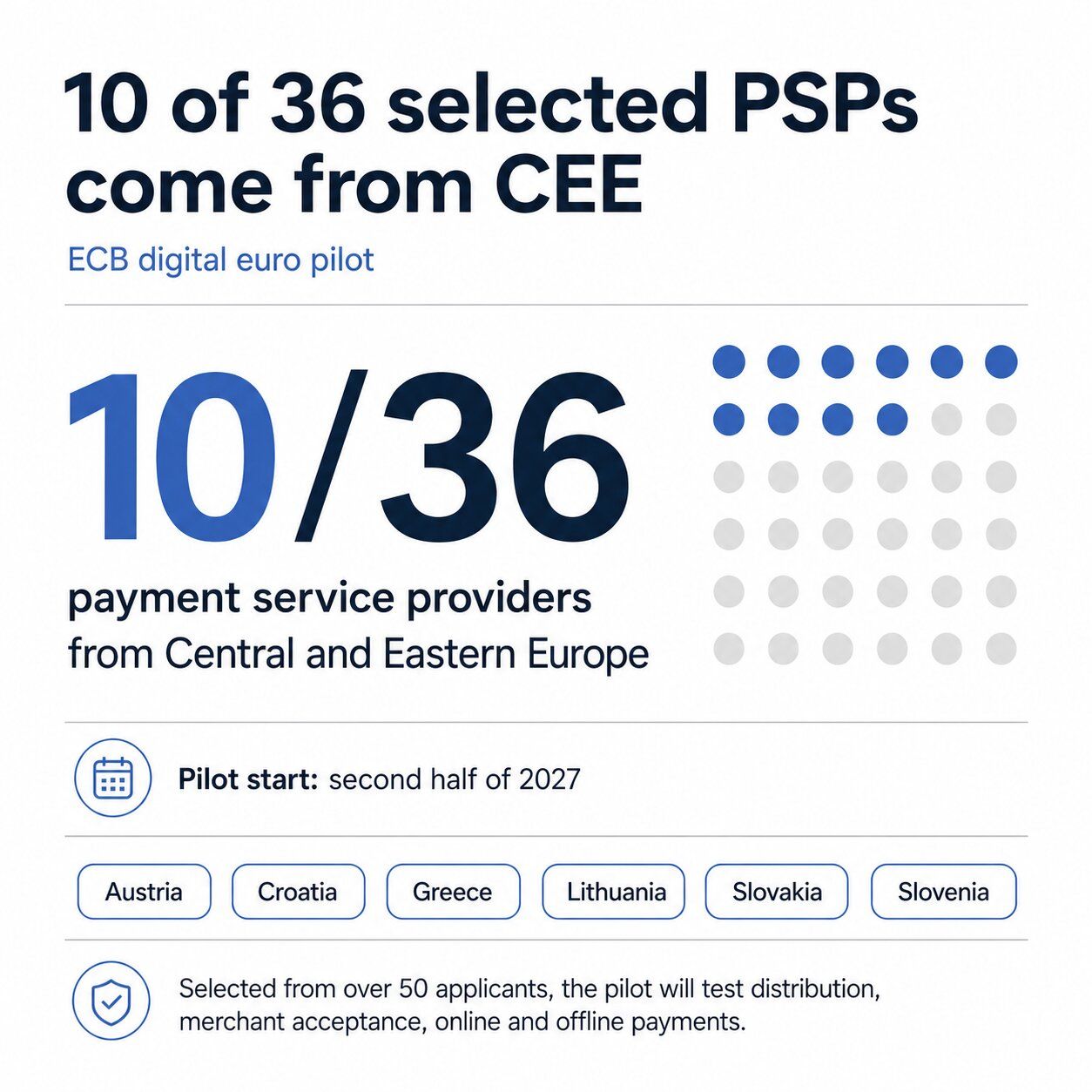
The European Central Bank selected 36 banks and non-bank payment service providers to participate in a 12-month digital euro pilot starting in the second half of 2027. Chosen from more than 50 applicants, the participants include major banks, payment companies and fintech firms representing different business models and markets across the euro area.
The pilot will test the digital euro’s technical functionality, operational processes and user experience using a beta version that will not have legal-tender status. Participating providers will either distribute beta digital euro accounts and payment services or enable merchants to accept payments. The exercise will test person-to-person and person-to-business transactions online, offline, through e-commerce and at physical points of sale.
The pilot will involve the ECB and 19 euro-area national central banks, including those of Croatia, Estonia, Latvia, Lithuania, Slovakia and Slovenia. Selected providers include UniCredit, Revolut Bank, Stripe and Nexi. The exercise forms part of the Eurosystem’s preparations for a possible digital euro, although an eventual issuance remains dependent on the adoption of the EU legislative framework.
Why it matters for CEE
The participation of six euro-area CEE central banks gives the region a direct role in testing how the digital euro could operate in practice. This should allow regional payment habits, banking structures and infrastructure constraints to inform the design before any wider rollout. For CEE payment providers and banks, the pilot also offers an early indication of the technical and operational investments that participation in a digital euro system may require.
Its significance extends beyond euro-area members: banks and payment providers in non-euro countries such as Poland, Romania, Czechia and Hungary will need to monitor how the digital euro affects cross-border payments, competition and customer expectations. The pilot also links the digital euro’s operational development to the broader debate about strengthening the euro’s global role, as a widely accessible public digital currency could support deeper euro-denominated markets and reinforce Europe’s monetary and financial autonomy. It therefore marks an important shift from legislative and conceptual discussions towards operational testing.
ESAP enters its first implementation phase
ESMA began collecting information and metadata from Officially Appointed Mechanisms and national competent authorities on 10 July, marking the first operational phase of the European Single Access Point (ESAP). ESAP is intended to provide free, centralised access to publicly available financial and sustainability information on EU companies and financial products when the platform opens to the public in July 2027.

ESAP implementation timeline. Source: European Securities and Markets Authority (ESMA), ESAP Open Hearing, 16 February 2024, p. 7.
The first phase covers information disclosed under the Transparency Directive, Prospectus Regulation and Short Selling Regulation. Entities within scope must submit their publicly disclosed information to designated national collection bodies in data-extractable or machine-readable formats, accompanied by standardised metadata. Further categories of information will be incorporated gradually as ESAP is rolled out.
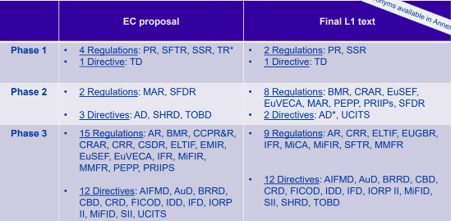
ESAP scope by implementation phase, comparing the European Commission proposal with the final Level 1 text. Source: European Securities and Markets Authority (ESMA), ESAP Open Hearing, 16 February 2024, p. 5.
Why it matters for CEE
ESAP could help reduce one of the practical disadvantages facing smaller CEE capital markets: the comparatively low visibility and accessibility of information on regional issuers. A central EU platform could make companies easier for cross-border investors to identify and compare, particularly where national disclosure systems, languages and formats currently create barriers. However, the benefits will depend on data quality, timely national implementation and whether investors actively use ESAP. The platform can improve access to information, but it cannot by itself address limited liquidity, small listing pipelines or weak analyst coverage.